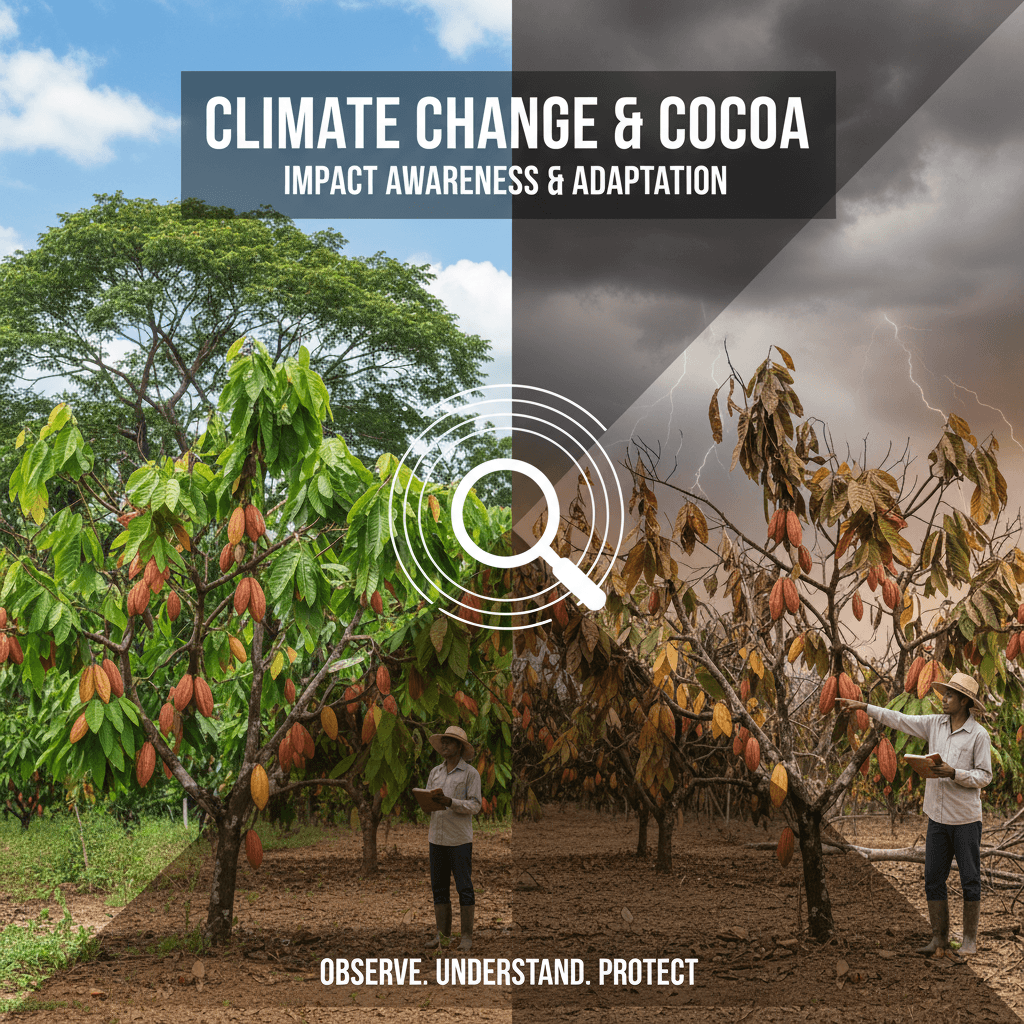
1. Monitor local weather patterns consistently
Farmers should make it a habit to observe and track daily weather conditions such as rainfall, temperature, and wind. This can be done through multiple sources:
Local radio and television weather reports
Community information systems like mobile vans or extension officers
Personal observation (e.g., noting delayed rains, unusually hot days, or stronger winds)
Over time, these observations help identify patterns such as shorter rainy seasons, prolonged droughts, or unpredictable storms, which are key signs of climate change.
2. Observe the condition of cocoa and shade trees
Cocoa trees are sensitive to environmental changes, so farmers should closely watch for:
Leaves turning yellow or dropping early
Reduced flowering or pod production
Signs of heat or water stress (wilting, drying branches)
Shade trees should also be monitored since they play a critical role in protecting cocoa. Changes like leaf loss or dieback in these trees may indicate worsening climatic conditions.
3. Pay attention to environmental drying trends
Beyond individual crops, farmers should observe the broader farm and community environment, including:
Soil becoming drier or less fertile
Streams, rivers, or wells drying up faster than usual
Increased frequency of bushfires or dry vegetation
These trends can signal long-term shifts in climate that may affect farming productivity and water availability.
4. Share knowledge and raise awareness within the community
Climate awareness becomes more effective when it is shared. Farmers are encouraged to:
Discuss observations with fellow farmers
Engage community leaders in conversations about changing conditions
Collaborate with agricultural extension officers, NGOs, and government agencies
This collective awareness helps communities respond more effectively, adopt better farming practices, and access support or resources when needed.