The idea behind integrating climate-smart shade trees into farms—especially cocoa systems—is to improve productivity, resilience, and environmental health at the same time. Let’s unpack each part of the summary so it’s clearer and more practical.
#1. Why “climate-smart” shade trees matter
Trees like Morinda leucida (Konkroma), Terminalia ivorensis (Emire), and Persea americana (Pear/Avocado) are considered climate-smart because they:
Moderate temperature: They reduce heat stress on crops like cocoa by providing shade.
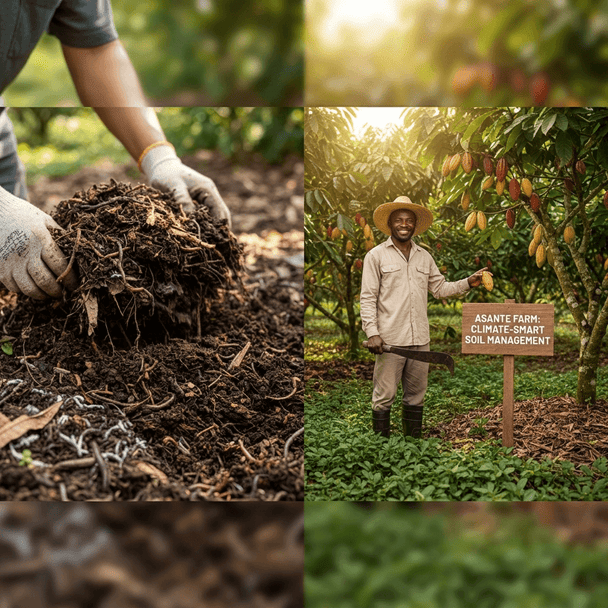
Improve soil fertility: Fallen leaves decompose and add organic matter.
Enhance water retention: Shaded soil loses less moisture, which is critical during dry periods.
Provide extra income or food: For example, avocado trees produce fruit that can be sold or consumed.
Support biodiversity: They attract beneficial insects and birds.
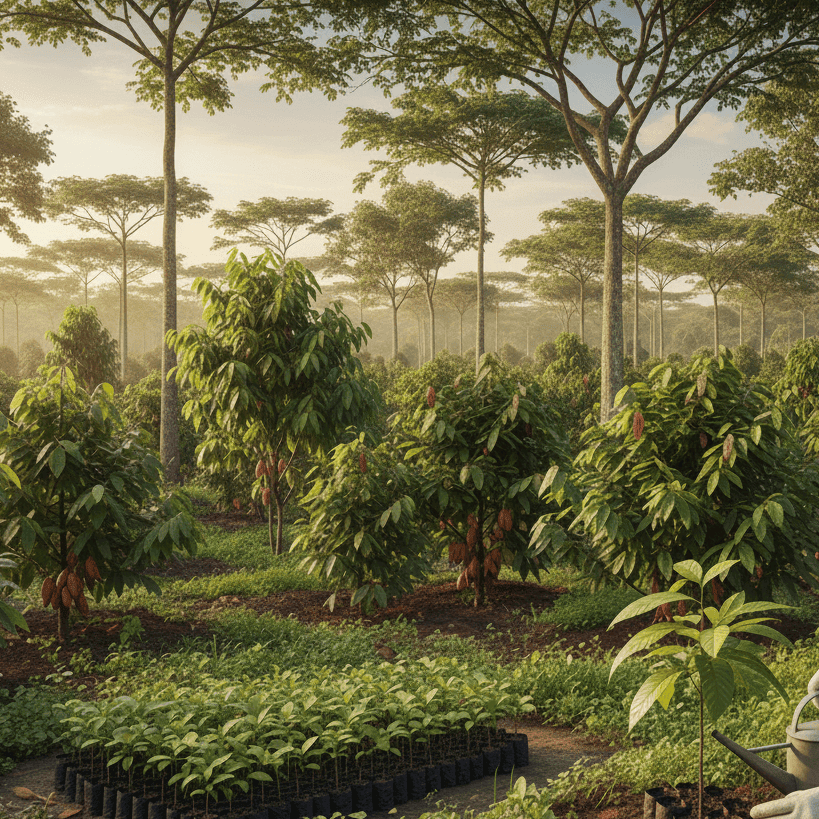
In cocoa farming, this approach is often called agroforestry, where crops and trees are grown together.
#2. Integrating trees into your farm
Planting these trees isn’t random—you need to:
Space them properly so they don’t compete too much with cocoa for sunlight, water, and nutrients.
Maintain a balanced canopy cover (not too dense, not too sparse).
Choose species that are compatible with cocoa growth cycles.
The goal is partial shade, not full shade.
#3. Nurturing naturally growing trees
Many farms already have young trees growing naturally. Instead of clearing everything:
Identify useful species and protect them.
Remove only unwanted or invasive plants.
Follow guidance (e.g., from Ghana Cocoa Board) on the recommended number of shade trees per hectare to avoid overcrowding.
This saves money and maintains ecological balance.
#4. Establishing nurseries (individual or community)
Setting up a nursery allows farmers to:
Raise healthy seedlings of preferred tree species.
Ensure availability of planting materials when needed.
Reduce dependence on external suppliers.
Community nurseries are especially useful because they:
Share costs and labor
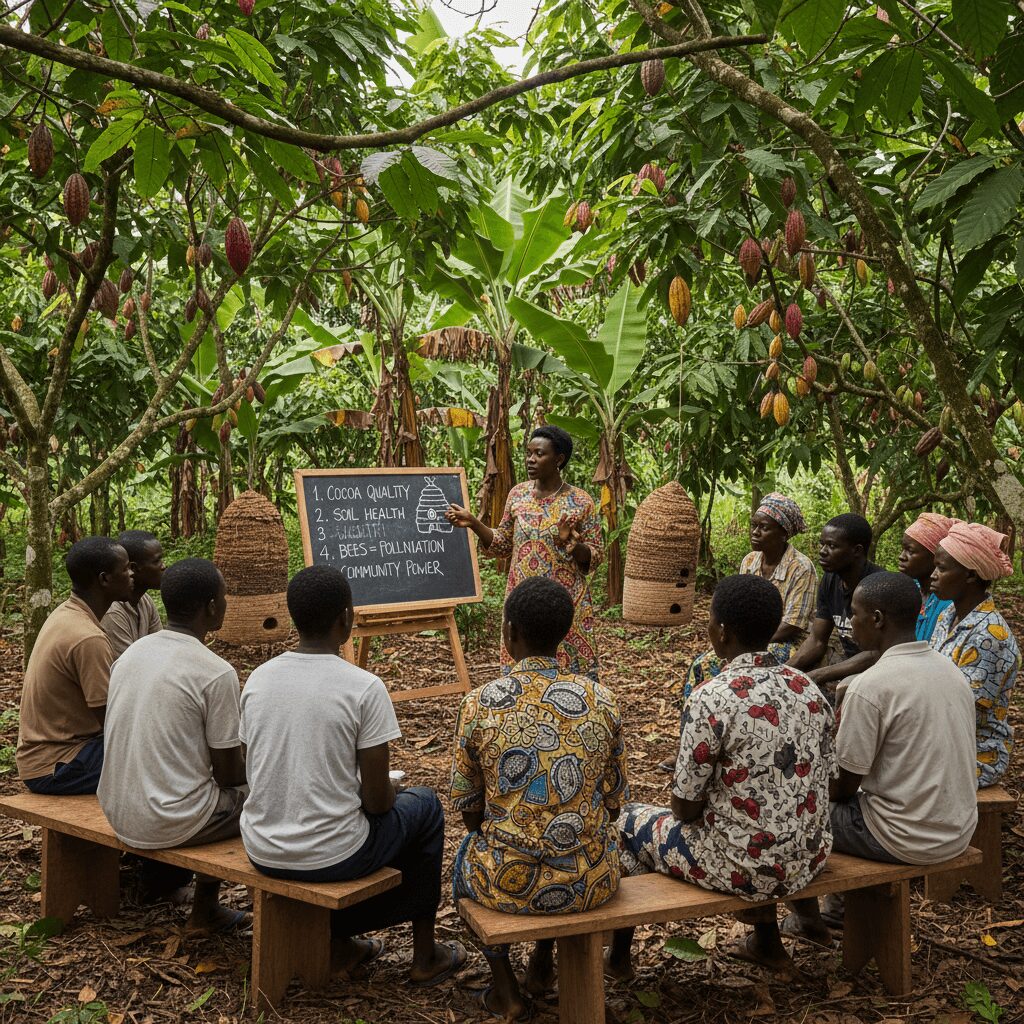
Enable knowledge exchange
Support larger-scale adoption
#5. Monitoring and managing shade trees
Once trees are growing, active management is essential:
Leafing: Indicates tree health and shade density.
Fruiting: Important for trees like avocado that provide additional income.
Seeding: Helps with collecting seeds for future planting.
You also need to:
Prune regularly to control shade levels.
Remove diseased branches.
Ensure cocoa trees still get enough sunlight (too much shade can reduce yields).
#Big picture
This approach helps farmers adapt to climate change while improving long-term productivity. Instead of relying solely on inputs like fertilizers, it builds a more self-sustaining farm system that:
Buffers against extreme weather
Diversifies income
Improves soil and ecosystem health