#1. Join farmer co-operatives
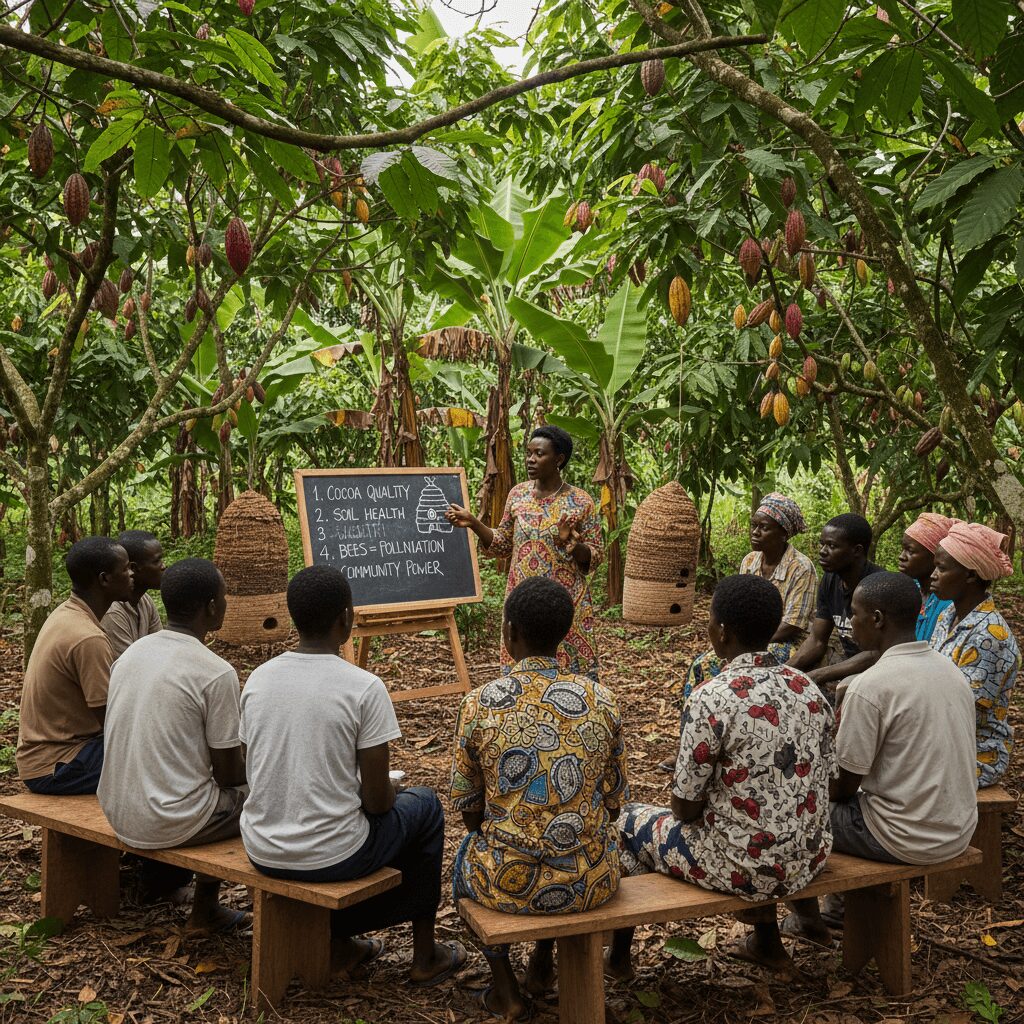
Being part of a co-operative gives farmers collective strength. Through groups supported by bodies like the Ghana Cocoa Board, you can:
Access shared knowledge: Learn better farming practices from peers and extension officers.
Get credit more easily: Banks and NGOs are more willing to lend to organized groups.
Receive inputs and support: Fertilizers, seedlings, and training are often distributed through co-ops.
This reduces individual risk and improves productivity.
#2. Encourage women’s participation
Women play key roles in cocoa farming, yet are often underrepresented in decision-making.
Involving women improves farm management and household income use.
It strengthens community resilience, since women often lead food security and savings efforts.
Equal participation ensures fair access to training, land, and finance.
#3. Avoid no-shade cocoa farming
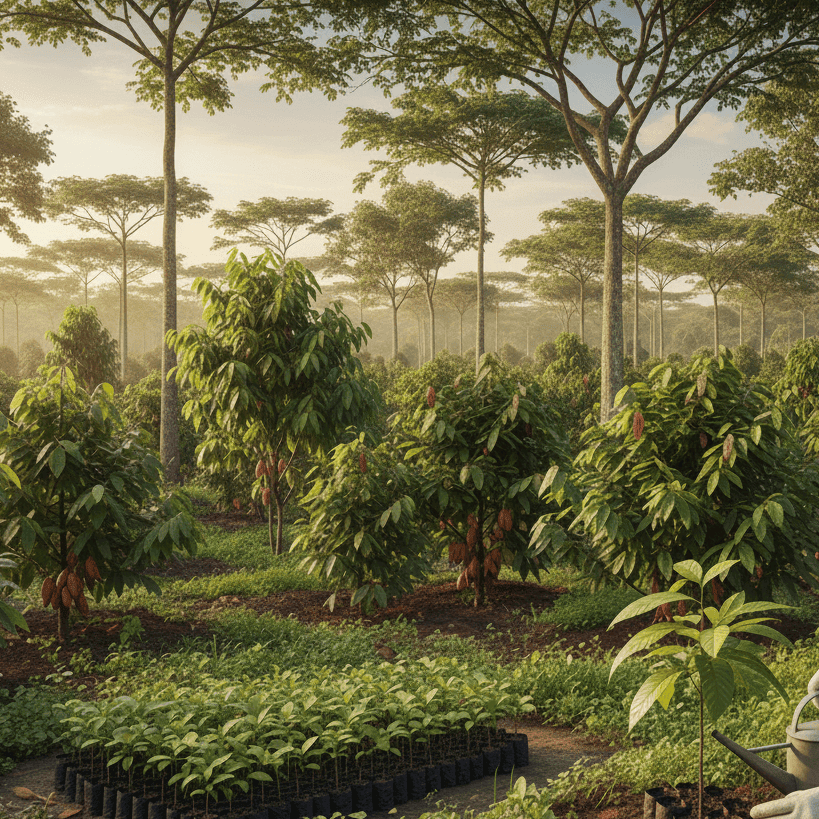
Growing cocoa without shade may give short-term gains but creates long-term problems:
Trees become more vulnerable to heat and drought.
Cocoa lifespan is shortened, reducing long-term income.
Soil degrades faster.
Maintaining shade trees supports sustained yields and farm longevity.
#4. Diversify income sources
Relying only on cocoa is risky due to climate variability and price changes. Adding other activities helps:
Beekeeping: Provides honey and supports pollination.
Food crops (e.g., cassava, maize): Ensure household food security.
Animal rearing: Adds steady income and manure for soil fertility.
Diversification spreads risk and ensures income even when cocoa underperforms.
#5. Location-specific crop integration
Different areas favor different complementary crops:
In Offinso, growing plantain and banana alongside cocoa can boost income and provide shade.
In Adansi, oil palm is well-suited and offers an additional revenue stream.
This approach uses local ecological advantages to maximize returns.
#6. Participate in carbon credit schemes
Carbon credit programs pay farmers for practices that store carbon, such as planting and maintaining trees.
Provides extra income beyond cocoa sales.
Encourages sustainable practices like agroforestry.
Connects farmers to global climate initiatives.
#Big picture
These strategies make cocoa farming more stable by combining community support, inclusive participation, sustainable practices, and multiple income streams. Instead of depending on a single crop and unpredictable climate, farmers build a system that is economically and environmentally resilient.
If you want, I can also compress this into a USSD-friendly format like before.